Silpada
Leveraging A/B testing to evaluate alternative designs to optimize the checkout process.
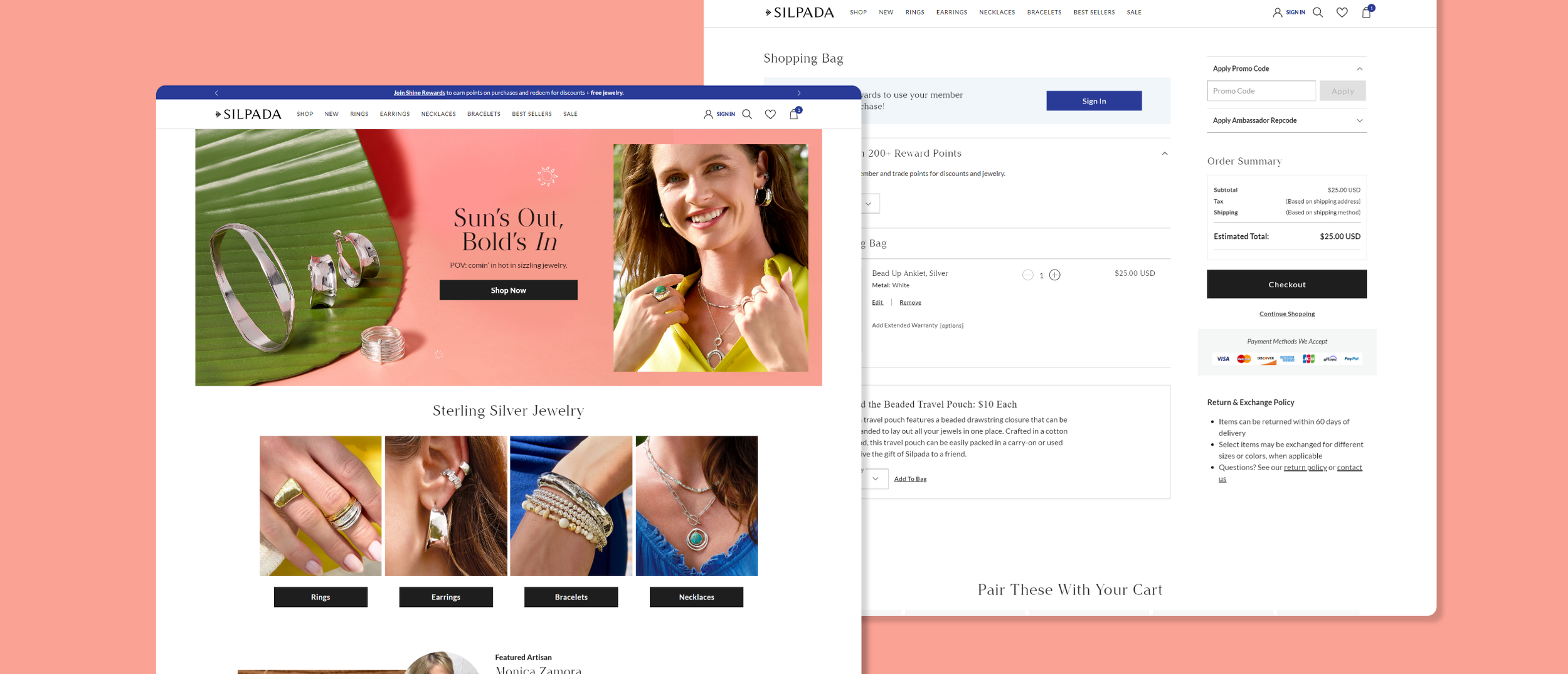
Silapda | The Brand
Silpada stands out in the jewelry world for its meticulously handcrafted, premium-quality pieces. Their collection features an array of designs, from necklaces and bracelets to earrings, blending modern trends with timeless sophistication. Committed to ethical sourcing and sustainable practices, Silpada not only delivers stunning jewelry but also upholds responsible production standards.
The Problem
When a user who is not logged in clicks the checkout CTA button on the cart page, they are redirected to a separate page offering the options to "Sign In/Create an Account" or "Checkout as Guest." This extra step creates a barrier to completing the purchase, leading to frustration and higher bounce rates. Users who are ready to check out may be discouraged by this additional decision point, especially if they are seeking a smooth and efficient shopping experience.
Objective
Objective
Using Optimizely's full-stack experimentation feature, we decided to conduct an A/B test to compare the current checkout process with alternative designs. We hypothesized that removing the forced selection page would increase conversion rates by reducing barriers to completing the payment. Key metrics included total purchase conversions per visitor and bounce rates.
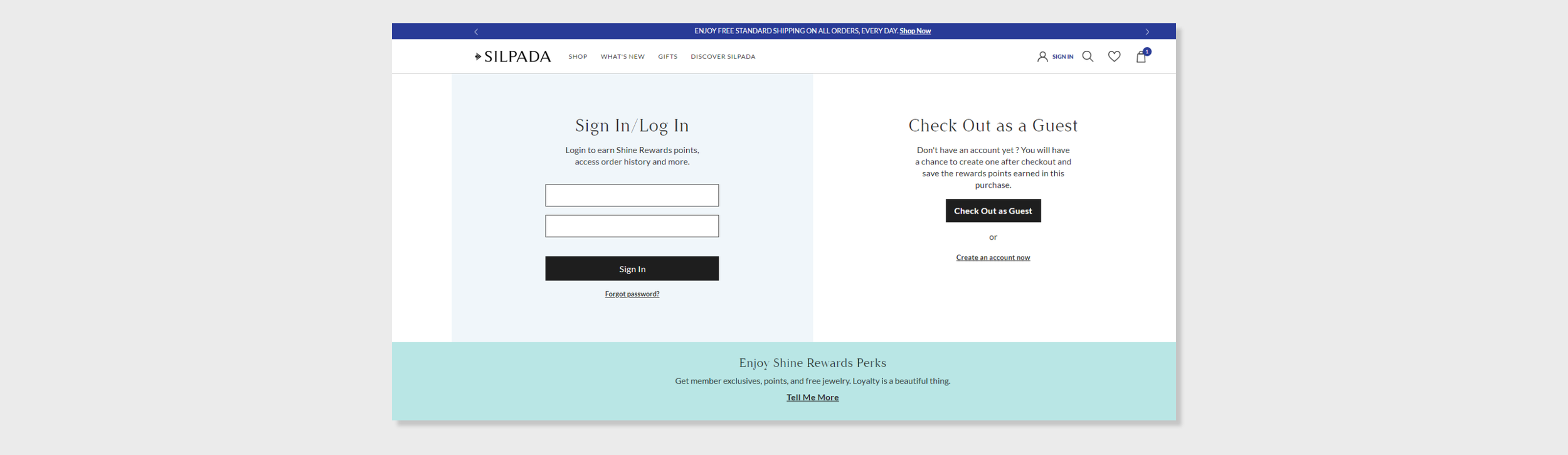
In the original design, clicking the checkout CTA button when not logged in took users to a separate page where they could choose to either "Sign In/Log In" or "Checkout as Guest."
Original Design
In the revised design, users will still have the option to join the loyalty program and earn points, but this process will be integrated directly into the cart and checkout pages. This streamlining aims to create a smoother and less intimidating experience. Users who decide to checkout as guest can do so without having to make a manual decision to do so.
Proposed Design
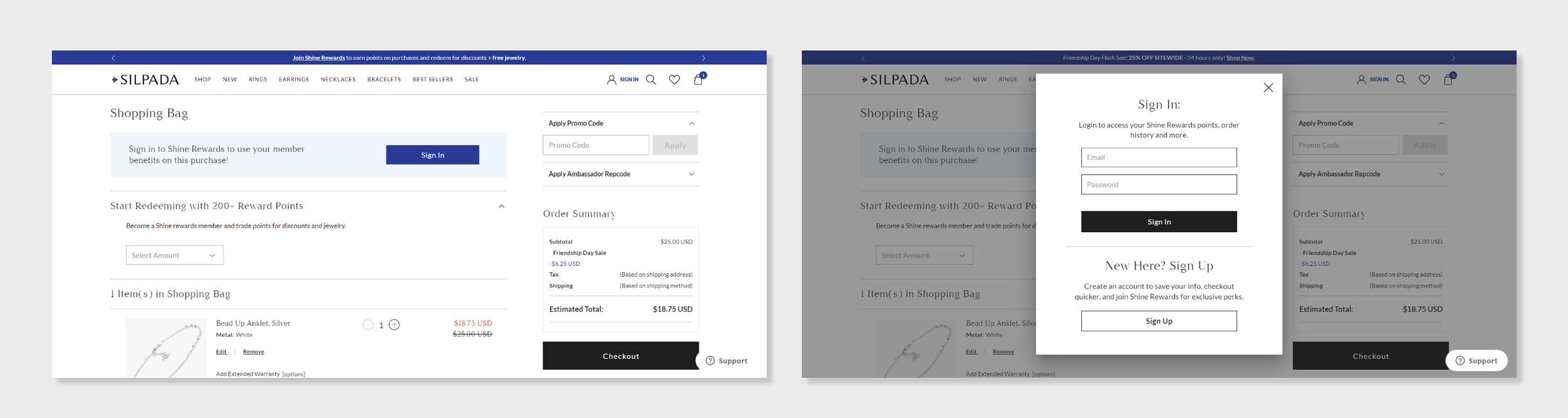
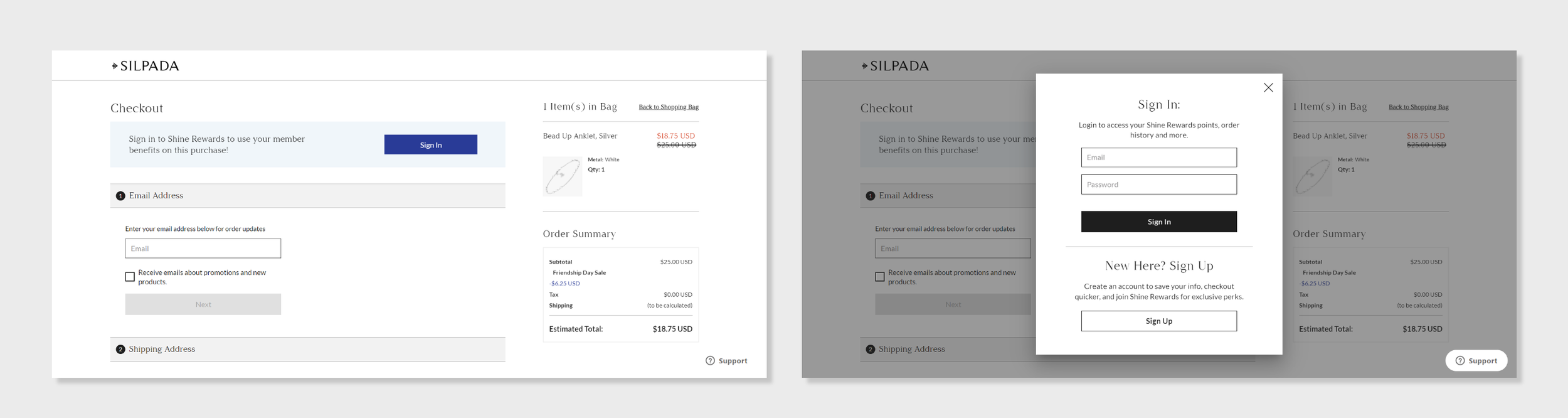
Using Optimizely’s full-stack experimentation tool, we tracked the primary metric of total conversions per visitor, measuring users who completed the entire checkout process. Over 22 days, we observed a statistically significant increase in conversions with the new variation. Removing the forced login page resulted in 70% of users completing their purchases
A/B Testing